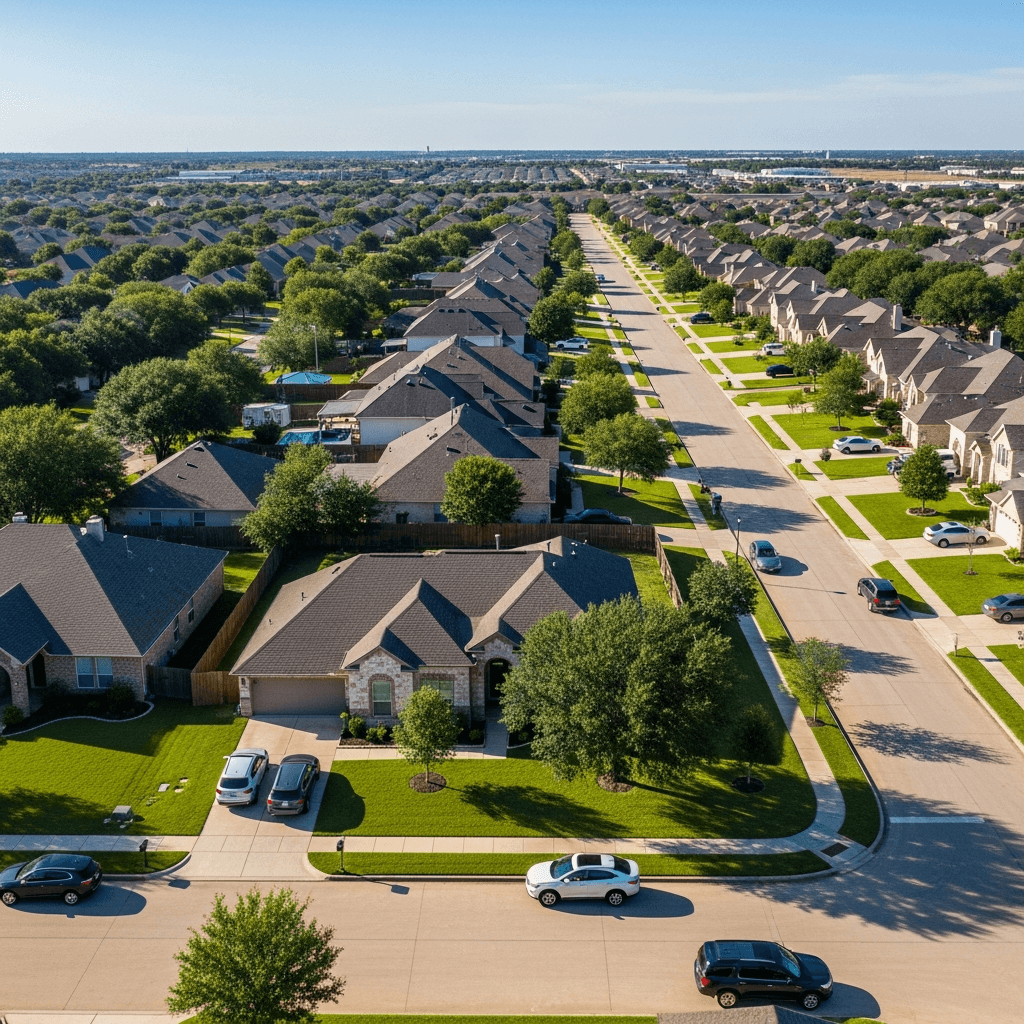

Every year, millions of Texas property owners receive appraisal notices that feel too high. Many assume there is nothing they can do about it. That assumption costs them real money.
The truth is, Texas has one of the most property-owner-friendly protest systems in the country. The process is clearly defined in the Texas Property Tax Code (Chapters 41 and 42), and the state designed it so that everyday homeowners and business owners can participate, not just attorneys and tax consultants. Whether you handle it yourself or bring in experienced representation, understanding how the process works from beginning to end gives you a significant advantage.
The Texas Property Tax Protest Process at a Glance
Receive Your Appraisal Notice
Review the assessed value from your county appraisal district
File Your Notice of Protest
Submit by May 15 or within 30 days of receiving notice
Attend the Informal Hearing
Meet with district appraiser to negotiate a settlement
Formal ARB Hearing
Present your case to the Appraisal Review Board panel
Receive the ARB Order
Written decision delivered, with further appeal options if needed
Step 1: You Receive Your Notice of Appraised Value
Every year, your county appraisal district is required to send you a Notice of Appraised Value if certain conditions are met, such as a change in your property's assessed value, a new property added to the rolls, or a change in exemption status. This requirement comes from Section 25.19 of the Texas Property Tax Code.
The notice includes your property's proposed market value, the previous year's value, exemptions applied, and an estimated tax amount. This document is the starting point. Read it carefully and compare the assessed value to what you believe your property would actually sell for on the open market as of January 1 of the tax year.
Step 2: File Your Notice of Protest
If you believe your property's assessed value is too high, or if there are errors in your property records, you have the right to formally challenge the appraisal. This right is established under Section 41.41 of the Texas Property Tax Code.
To file, you submit a Notice of Protest (Form 50-132) to your county's Appraisal Review Board (ARB) at the appraisal district office. The form asks you to identify your property, state the grounds for your protest, and sign the document. It is a straightforward, one-page form.
Critical Deadline (Section 41.44)
You must file your protest by May 15 or within 30 days after the date the appraisal district mailed your notice, whichever is later. If the deadline falls on a weekend or holiday, the next business day applies (Section 1.06). A document postmarked by the U.S. Postal Service on or before the deadline is considered timely (Section 1.08).
Our advice: File first, gather evidence after. Filing preserves your rights. You can always withdraw later.
Valid Grounds for Protest
Under Section 41.41(a), Texas law provides several valid reasons to protest:
- Market value is too high - The assessed value exceeds what your property would sell for on the open market as of January 1 (Section 23.01).
- Unequal appraisal - Your property is assessed at a higher percentage of market value compared to similar properties in your area (Section 41.43(b)(3)). This is often the strongest and most commonly used ground.
- Incorrect property records - The district has errors in square footage, lot size, features, year built, or other data points.
- Exemption denial - A homestead, over-65, disabled veteran, or other exemption was denied or not properly applied.
- Agricultural value denial - Your land qualifies for agricultural appraisal (1-d-1 valuation) but the district denied or modified it.
Step 3: The Informal Hearing
After you file your protest, most county appraisal districts will schedule an informal hearing before the formal ARB hearing. This is not required by statute in detail, but it is standard practice across Texas and is consistent with the ARB's broad authority to resolve disputes under Section 41.01.
The informal hearing is a one-on-one meeting with an appraiser from the district, not a panel from the ARB. It may take place in person, by phone, or through an online portal, depending on your county. The atmosphere is conversational, not adversarial. The goal is to negotiate a value that both sides can agree on.
If you reach an agreement at this stage, you sign a settlement stipulation and the protest is resolved. A large percentage of protests in Texas are settled at the informal level. This is where strong, organized evidence makes the biggest difference.

A formal ARB hearing room where property tax protests are presented to an independent citizen panel.
Step 4: The Formal ARB Hearing
If a settlement is not reached during the informal hearing, your protest moves to a formal hearing before the Appraisal Review Board (ARB). The ARB is an independent panel of citizens appointed under Section 6.41 to hear and decide property tax disputes. They are not employees of the appraisal district.
The formal hearing operates under specific rules outlined in Section 41.45 and Section 41.66:
- You must receive at least 15 days' written notice of the hearing date, time, and location (Section 41.46(a)).
- You can request the appraisal district's evidence at least 14 days before the hearing (Section 41.461(a)(2)).
- Both you and the chief appraiser present evidence and sworn testimony.
- You have the right to cross-examine the district's witnesses (Section 41.45(b), (d)).
- You may appear in person, through a designated agent, by signed affidavit, or by telephone if pre-arranged.
The hearing is quasi-judicial, meaning it is recorded and follows structured procedures. The ARB panel members must be impartial, with conflict-of-interest and bias protections under Section 6.412. After hearing both sides, the ARB issues a written order with its determination (Section 41.47).
What Evidence Actually Wins Texas Property Tax Protests?
While the Texas Property Tax Code does not rank types of evidence, decades of practice across the state's appraisal districts show clear patterns in what works. Here are the most effective categories:
Comparable Sales
Recent arm's-length transactions of similar properties near January 1 that sold for less than your appraised value. Include MLS data, closing statements, or sales affidavits.
Equity Comparisons
Grids comparing your property's assessed value per square foot to similar properties in your area. These support unequal appraisal claims under Section 41.41(a)(2).
Condition Documentation
Photos of foundation issues, roof damage, outdated systems, or location nuisances, along with contractor repair estimates. These explain why your property is worth less.
Income Data (Commercial)
Rent rolls, leases, operating statements, and capitalization analysis showing what an investor would pay based on actual income the property generates.
One of your most important rights: under Section 41.461(a)(2), you can request the appraisal district's evidence before your hearing. This allows you to see their comparable sales and valuation models ahead of time and prepare targeted rebuttals.
Step 5: After the ARB - Your Appeal Options
The ARB's written order is not necessarily the final word. If you are not satisfied with the determination, Texas law provides additional avenues under Chapter 42:
- Binding arbitration (Sections 41A.01-41A.12) - Available for properties with an appraised value under $5 million. A neutral, independent arbitrator reviews the evidence and issues a binding decision. The filing fee is $500, and you must file within 60 days of receiving the ARB order. This is a cost-effective alternative to district court.
- District court appeal (Sections 42.01-42.43) - Available for all property types. You file a lawsuit in district court challenging the ARB's determination. This is more common for high-value commercial properties where the potential tax savings justify the legal costs. You must file within 60 days of receiving the ARB order (Section 42.06(a)).
- SOAH appeal (Section 42.41) - For certain high-value or complex commercial cases, you may appeal to the State Office of Administrative Hearings for a more detailed evidentiary proceeding.
Your Rights as a Texas Property Owner
The Texas Property Tax Code is built to protect you. Here are the core rights that every property owner should know:
- Right to protest your property's appraised value and other appraisal district actions (Section 41.41).
- Right to timely notice of your appraised value (Section 25.19).
- Right to designate an agent to represent you in the protest process using Form 50-162 (Section 1.111).
- Right to inspect the district's evidence at least 14 days before your hearing (Section 41.461(a)(2)).
- Right to a fair and impartial ARB with conflict-of-interest protections (Section 6.412, Section 41.66).
- Right to appeal the ARB's decision through binding arbitration, district court, or SOAH.
Common Misconceptions About Property Tax Protests
Myth: “Protesting will raise my taxes.”
Reality: Texas law does not allow the appraisal district to raise your value as a result of a protest. The worst outcome is that your value stays the same.
Myth: “I need a lawyer to protest.”
Reality: Most protests are handled by property owners or tax consultants, not attorneys. The process is designed for everyday property owners to participate.
Myth: “It is not worth the effort for small amounts.”
Reality: Even a modest reduction in assessed value compounds year over year. A $20,000 reduction at a 2.5% tax rate saves you $500 per year, every year, until the next reappraisal.
Myth: “The deadline has passed, so I am out of luck.”
Reality: In limited circumstances, the ARB may hear late protests, such as when you did not receive proper notice. See Sections 41.44(b) and 41.44(c).
How The Woodlands Property Tax Group Guides You Through the Process
At TWPTG, we have helped thousands of Texas property owners navigate the protest process since 2015. We know how each county's appraisal district operates, what evidence works in specific jurisdictions, and how to present your case for the best possible outcome.
Here is what working with us looks like:
- Free property assessment - We review your appraised value, property records, and comparable data to determine whether a protest is worth pursuing.
- Evidence preparation - We build your case with comparable sales analysis, equity grids, condition documentation, and any other evidence relevant to your property and county.
- Filing and representation - We handle all paperwork, attend informal negotiations on your behalf, and represent you at ARB hearings.
- Appeals if needed - When the ARB result is not satisfactory, we pursue binding arbitration or district court appeal.
Our fees are contingency-based. You pay only if we successfully reduce your assessed value. If we do not get a reduction, you owe nothing. That is our commitment to putting your interests first.
Ready to Protest Your Property Tax Assessment?
Do not navigate the process alone. Our experienced team has handled protests across every major Texas county. Request a free review and find out if a protest could lower your tax bill this year.